
From candlelit dinners to catching a film together, dating can be wonderful. But when you have a disability, it can come with challenges too. Finding a venue, for example, goes beyond shared interests if you have to consider factors such as step-free access. Then there's navigating questions about your disability, facing ableism and coping with rejection.
But looking for love can and should - be enjoyable too. Here, we speak to three people from the disabled community about their experiences of dating and finding a relationship.
Challenging stereotypes
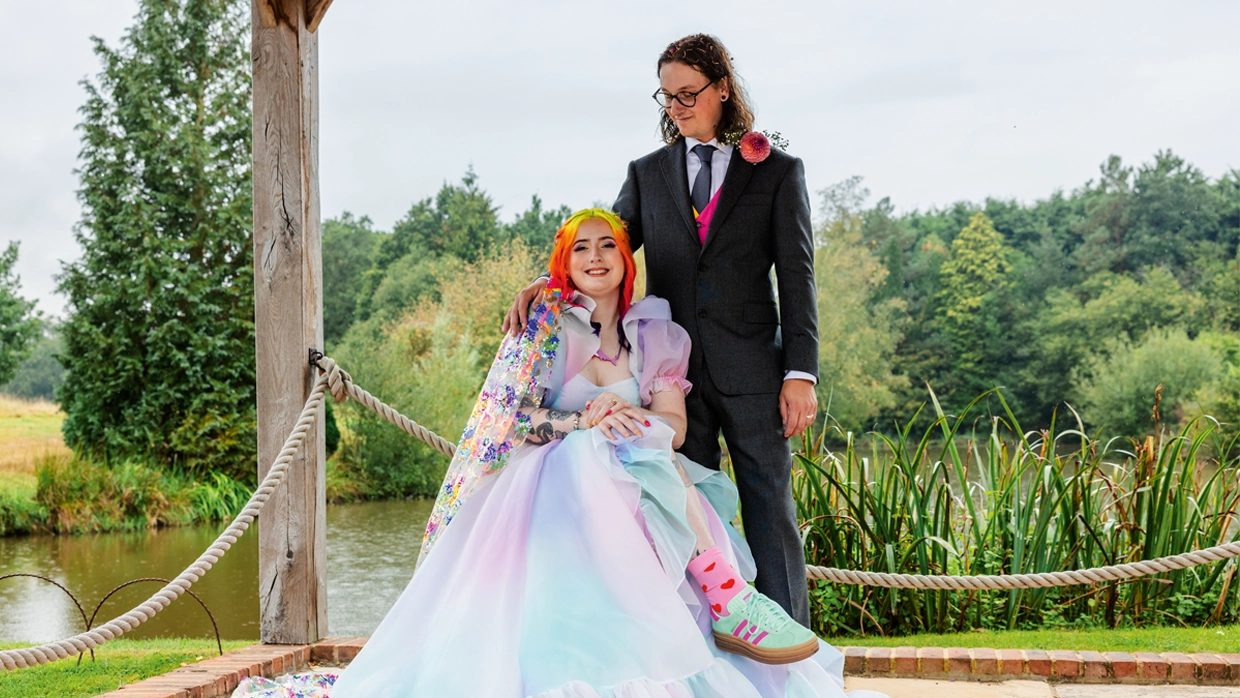
There are stereotypes about disability and dating. Thankfully these are being challenged by people like Eliza Rain, a disabled content creator who posts on Instagram and married their partner, Michael, in 2023.
"I think people think that disabled people cannot be in romantic relationships or that we're automatically burdens in our relationships, which isn't true," says Eliza. "Disabled people give loving, kindness and romance to a relationship. Of course, whatever a disabled person may bring to a relationship can 'look' different, but that doesn't make it any less valid or important."
Their partner, Michael, adds: "There's often this assumption that I'm the only one that 'brings' anything to our relationship, which is absolutely not true. We are a team and the relationship is equal."
We rarely see disabled and non-disabled people in relationships together on things like dating shows, which can add to the stereotype.
Eliza and Michael met at a party when they were 16 and then started dating. "I felt guilt as my disability progressed, but that guilt was very much from my own brain, and everyone around me was always supportive and lovely about it," says Eliza. "I think it's normal to struggle with either becoming disabled or your disability progressing, and it takes time. I feel very lucky to have had such a supportive partner, but also it should just be the bare minimum.
I really love the connection we have; we really are best mates who are now in a relationship, and I think that is the best way to be," adds Eliza.
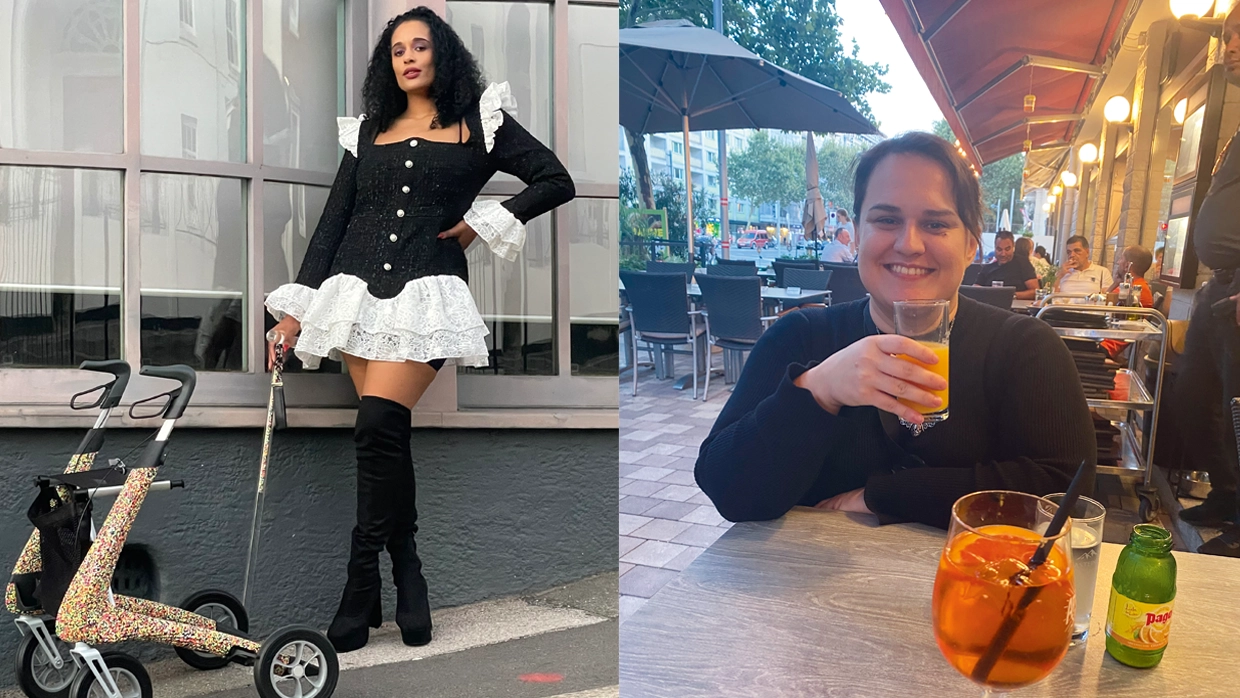
Roxy Murray is proudly living as a pansexual person with multiple sclerosis and writes and posts openly on Instagram about her experiences. She says a myth that needs challenging is "that we're undateable. Yes, we have other layers to our life, but I feel whether you have a disability or not, there are multi layers to everyone's life. A massive myth I campaign against is that we don't have a sex life, or we wouldn't want to be sexually active."
Where to meet that special someone
Sometimes, relationships spring from meeting someone with a shared interest, or who you became friends with first. "I happened to just bump into my partner at a concert; we started speaking and were like, let's be friends. And then friends became something else," says Roxy.
Dating apps are commonplace. Although she doesn't use them, Roxy says her stick is in lots of her Instagram photos, and that she would do the same if she was on a dating app, too.
"Do what's right for you and what you're comfortable with dealing with emotionally," she says. She stresses the importance of feeling safe when interacting on a dating app, and that disclosing your disability before meeting in person can be a safer option.
What to share
Deciding how and when to tell someone about your disability can be daunting. Anahita Harding is an artist who uses a wheelchair and is single. "I don't use dating apps - I meet people in person," she says. "As I have quite an obvious disability, I don't really need to disclose it, although over time I'll share more if I feel happy doing that. If I met someone online and didn't disclose it, and then went to meet them in person, that would be incredibly awkward."
Setting boundaries is important, and it can help to think beforehand about what you are and aren't comfortable sharing. "If they're asking really intrusive questions at an early stage, it makes me feel uneasy, and I usually end things there," says Anahita. "If they're making you feel uncomfortable it's a bad sign, so think about how you're feeling in that moment and if they are right for you."
Picking a date venue
Choosing where to go on a date can be exciting, but there can be barriers. It's key to communicate your needs, and to go for a place where you feel safe - somewhere that you're already familiar with may be a good option. It can be a helpful way to start a conversation with your date about your disability, by working together to find somewhere.
Websites such as Euan's Guide have good information on access at venues including restaurants.
Fostering self-love
The dating journey can be emotional, and fostering confidence and self-love is important. "Disability changes how we feel about our bodies, and we need to find that safe space and that love within ourselves first," says Roxy. "I think that's something that I often have to revisit with a forever changing body."
Anahita adds: "Always make time for yourself to rest, eat something nourishing and do something you enjoy, even if it's something small such as watching a film, lighting a nice candle or burning some incense."
Dating can bring its struggles and frustrations, but it can be worth persevering. As Eliza says: "It's okay to feel mixed emotions as a disabled person dating, particularly in the beginning, but you are worthy of loving, kind and supportive relationships."
Listen to or watch the Lifestyle Pod, series 1, episode 3, discussing dating with Hannah Barham-Brown, which you can find on the Lifestyle Podcast page.
WORDS OF WISDOM ON DATING
"Take a chance with yourself; love yourself first, then look outwardly." Roxy
"When meeting up with someone, choose a public place and meet during the day to ensure that you are as safe as possible." Eliza
"Don't pressure yourself to be with someone who isn't right for you. Being single is a lot better than being in a bad relationship." Anahita
"You do deserve love, and you do deserve pleasure. Remember that you're not a burden to anyone. You're actually a benefit." Roxy
Photos: Wonky Canvas, Tara Moore, Olha Danylenko/Getty Images; Amy Davies photography, courtesy of Roxy and Anahita