
“At age 11, I wrote my first song. It was about feeling like a turtle in a dog race - not being seen as equal and not fitting in. I'm not sure what I was going through, but clearly I had a lot of thoughts and feelings I needed to express.
“I've always written stories and poems, but back then, when I was a child, I didn't think they were cool, so I mainly kept them to myself. My siblings and I would just sing at each other at home. It was a way of having fun and bonding with them. It was only later in life that I realised I wanted to make music my career.”
Singing professionally
“My interest in music really developed through my teenage years. When I was 16, many of my friends were into music and rapping, and I used to sound engineer for them.
“I never thought I could be a musician, though, because I never saw anyone who looked like me in the Top 100 charts. I always thought I had to work in the background somehow.
“I started taking music more seriously when I was 18 and went to the University of Westminster to study music production and business. Even then, I studied production and business - not performance - because I still didn't see myself as a performer. That didn't happen until I was 24.
“In 2018, I took a leap of faith to create my own music - not just feature on someone else's track, but make something that was truly mine. I released my debut EP, Perception, in 2019, and realised this was something I could really do. I haven't looked back.
“Since then, I've been performing at shows and festivals, both nationally and internationally. In 2024, I released my second EP, Notes To Self, and I'm now working on my next project.
“Performing at the 2012 London Paralympics team welcoming ceremonies was a huge moment for me. The opportunity came about because I was doing a lot of things in theatre at the time and someone recommended me.”
Giving voice to my experiences
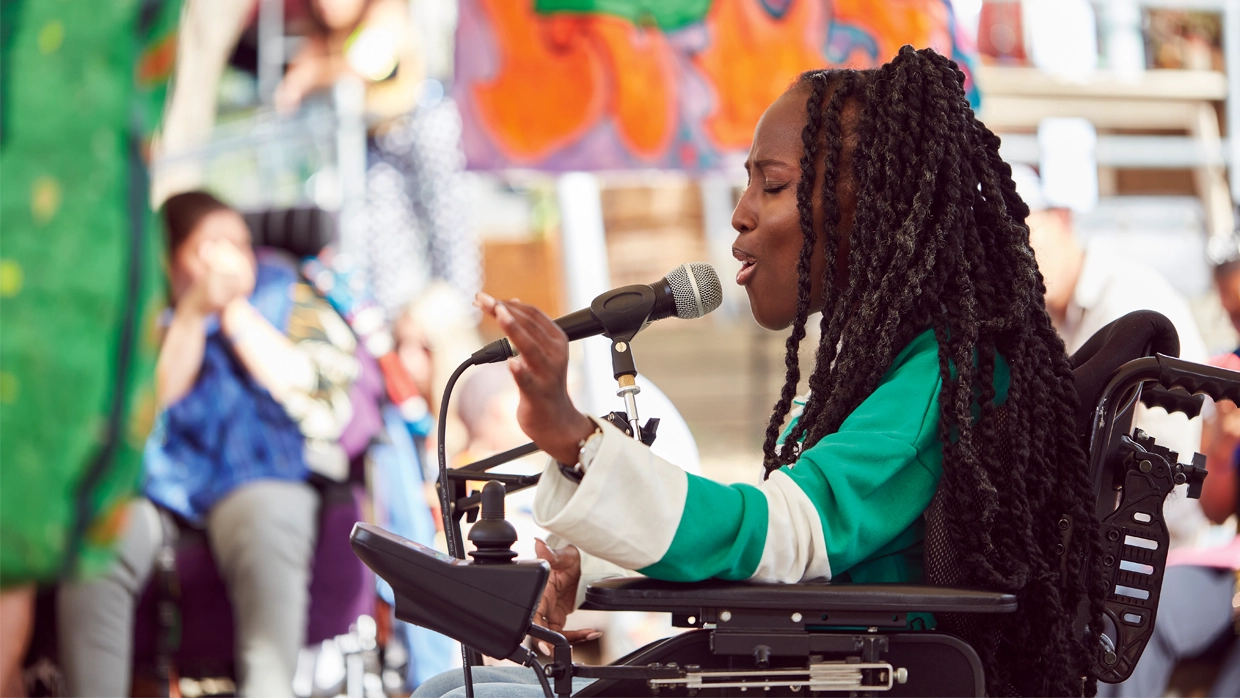
“When asked to describe my singing style and sound, I always say I'm a spoken word artist, and the bonus is that I can sing. I think I have a unique ability to weave together words and melodies to create a message that is both thought-provoking and relatable.
“All the music that has influenced me focuses on storytelling. I want to tell the stories that often don't get highlighted and give a voice to my experiences as a Black disabled woman.
“I remember once talking with other artists who asked why I'd never released a love song. I said: 'Because there are already a million love songs and there are so many other things I have to say.' I want to talk about issues that affect women, Black people and the disabled community.
“My song, Barely, means a lot to me because it was the first time I spoke openly about my own mental health and made a music video for it. We don't often see disabled people in music videos. “Most of the challenges I've faced in my career have been around accessibility. I think the music industry is still behind other industries in terms of access.
“For example, a show booked me three months in advance and, when I showed up, the venue wasn't accessible. I still performed because I knew some people came specifically for me. I told the team they'd have to reconfigure the room and I got the audience to hold torches. The audience became part of the show it ended up being a special moment. One thing about me is that I will always put on a good show.
“That's why it's so important to connect with organisations like Attitude Is Everything and Graeae - they make you feel you can do whatever you want. They give artists like me the confidence to ask for what we need and build the careers we deserve.
“A real highlight in my career was finding an affordable and accessible studio: Crown Lane Studios in Morden, London. Premises Studios is also good.
“I think it's important as an artist to ask and know what you need. One piece of advice I'd give is to learn all the rules so you know which ones to break and which to bend. You might have to do things differently as disabled people, but the end result can still be the same or even better.
“Next year, I plan to have my first headline show in London, which I cannot believe I am saying out loud!
Visit Miss Jacqui website.
How to get involved
- Drake Music is a disabled-led organisation working at the intersection of music, disability and technology. Through one of its core programmes, the Drake Music Collective, it supports early-career disabled musicians with mentoring, bursaries and performance opportunities. Accessibility is embedded throughout, ensuring a supportive and inclusive experience for artists.
- Attitude Is Everything connects disabled people with music and live event industries to improve access together. Its Next Stage artist network helps performers navigate the industry.
- Charity Nordoff and Robbins offers online tutoring for anyone who wants to learn musical skills and improve their singing but finds it hard to engage in traditional lessons.
Photos: James Drury