
Invisible disabilities come in many forms, one of the most common being pain. Just because it is common doesn't mean it is well understood, though. From the actual discomfort to dealing with doctors and insensitive comments, the realities of living with chronic pain can be extremely difficult.
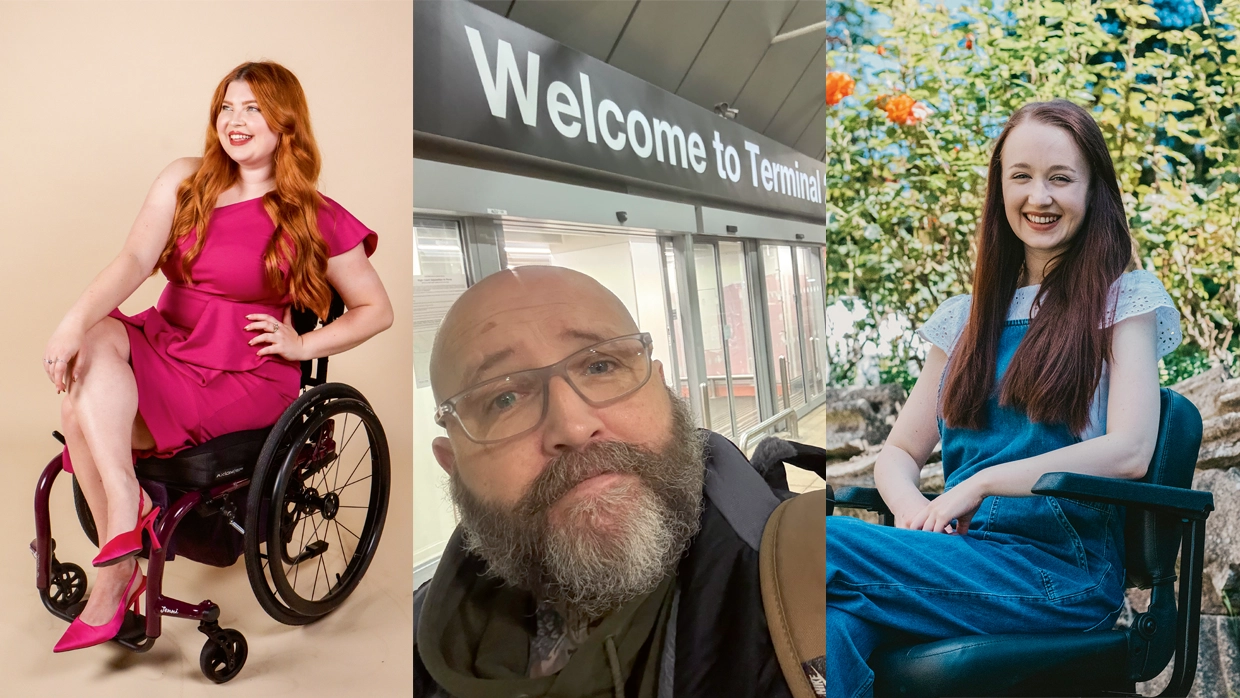
Jenni Pettican, better known online as Chronically Jenni, was diagnosed with hypermobile Ehlers-Danlos syndrome (hEDS) in 2016, alongside postural orthostatic tachycardia syndrome (POTS). She says that one of the hardest things is never knowing what each day will bring.
"With connective tissue disorders like EDS, your body is affected in completely different ways, at completely different times. There's generally feeling rubbish and then there are specific flares, but there's almost always a low level of pain and a lack of energy." Even though awareness of many invisible conditions is growing, there is still much that people don't see or understand - even within the healthcare community. Some medics are very understanding, while others are either overly dismissive or prone to overreacting to symptoms, says Jenni.
"People ask me every week: how do I get doctors to listen? There's a desperate need for better education and I'd love to be the patient-expert to do this, but nothing has come of it yet," she adds.
Fluctuating symptoms
A lack of understanding is something writer Pippa Stacey has also dealt with regularly in the years she has been living with myalgic encephalomyelitis/chronic fatigue syndrome (ME/CFS). "When people can't see things, they are sometimes inclined to doubt whether it's real," she says. This isn't helped by fluctuating symptoms. "You might see us on a good day and you'll have no idea of the price we pay for showing up in those moments. Please just ask, 'How can I help?' and pay attention to the answer, without making assumptions or jumping to conclusions," says Pippa.
Another helpful trick is pacing - something that both Pippa and Jenni have found useful, posting about it on their blogs and social channels. "When you have limited energy, it's vital to pay attention to the demands on you. Learning how to pace that energy over a day or a week helps you avoid falling into a boom-and-bust cycle, where you push yourself too hard and end up more unwell as a result," says Pippa.
Jenni has also benefitted hugely from pacing. "Pacing myself, listening to my body and asking for help has stopped me having big crashes every couple of weeks. Now, with the help of my carers, I can often go months without crashing."
The right mindset
Alongside practical methods to manage pain - whether that's medication, gentle movement, pacing or using mobility aids - there's a big mental aspect to get right, too. Having the right mindset isn't going to take away the pain, but it really can help.
Mike Davies knows this more than most. "In March 2023, I had a fall after a long night shift at the hospital where I worked in the operating theatres. What I didn't realise at the time was that I had done some serious damage to my back. I carried on as best I could but, by October, I was diagnosed with a fractured spine. That's when life really changed."
Mike admits this left him in a dark place mentally. "I thought working for the NHS was going to be my life," he says. "A few months after losing my job, and with the pain I was having, I just didn't want to be here. I couldn't cope." Too scared to admit to anyone how bad things had become, Mike says he started writing things down instead. Not only did the process of writing feel cathartic, but he also saw the glimmers of a book there.
Fast forward to today and Mike has gone from being the lad who was "no good at English in school", to being an author and screenwriter (The Veil of Silence), setting up a film company and helping others write their stories, too. All while dealing with constant, often debilitating, pain and depression. "In a way, it's turned a negative into a positive," he says. "I'm currently waiting on spinal fusion because the pain is so bad. Yet it also feels different. It's like a positive pain because of everything I have done and achieved. And I want to let others know that they can find something to help them, too."
Real-life advice
There's so much Mike, Jenni and Pippa have in common, despite their different journeys and conditions. Their writing has brought comfort, community and a sense of purpose by helping others navigate the world of pain and unseen conditions, so what advice do they have?
"Find something, anything, in your heart that you think about all the time, and just use it as something to keep you grounded. For me, it's my kids. And if you can't find something, please talk to someone," advises Mike.
"Don't compare yourself to others, disabled or otherwise," suggests Pippa. "Pay attention to the things that bring you joy. It's OK to spend your limited energy on the things that matter to you, that bring you purpose and make you feel like yourself."
For Jenni, that's been activities like a choir, especially when carers can support her to attend or she can join in online on bad days, and swimming at an accessible local pool with her partner, as well as making key mental adjustments. "My condition isn't going to change much, so I've had to learn to love the life I have. I say, take pride in yourself and what you have achieved, whether that's getting in the shower or flying a plane! Find a bit of something to keep you moving forward," says Jenni.
Pippa agrees. "It can be so easy to focus on what your chronic illness has taken away and it's valid to grieve that. But you can learn to live life in a new way. I hope this motivates somebody to pay attention to what their soul is telling them they want, as well as what their body is telling them."
FIND HELP, SUPPORT AND COMMUNITY
★Pain UK: an alliance of charities supporting people with all kinds of chronic pain.
★LiveWell with pain: full of resources for self-management.
★The British Pain Society: download leaflets and join their Lived Experience Collective.
★Action for M.E: care and support for anyone affected by ME.
★EDSUK: advice and support on all aspects of EDS and disability.
★Read How to Do Life With a Chronic Illness by Pippa Stacey.
Photos: DrAfter123/DigitalVision Vectors/Getty Images; Bethany Peace; courtesy of Michael Davies; Eleanor Martin Photograph