

Japan is a country of contrasts - with traditional buildings next to modern design, a passion for innovation alongside old-fashioned values. This was perfectly illustrated during the 11 days Stan and I spent in the cities of Osaka, Nara and Kyoto in the Kansai region, known as the cultural centre of Japan. But we also found great accessibility and a genuine desire to help.
Arriving in Osaka, the city hit us full in the face - vibrant, bustling, neon lights glowing, streets filled with people. There was no gentle introduction; Stan and I were plunged straight in, navigating busy streets and trying to decipher unfamiliar signs.
When I think of Osaka, I think of those glowing lights. There was Osaka Castle, illuminated against the night sky. We took the lift to the top of Abeno Harukas, Japan's second tallest building. From here the whole sprawling metropolis was laid out beneath us, a mesmerising sea of lights and roads snaking off into the distance.
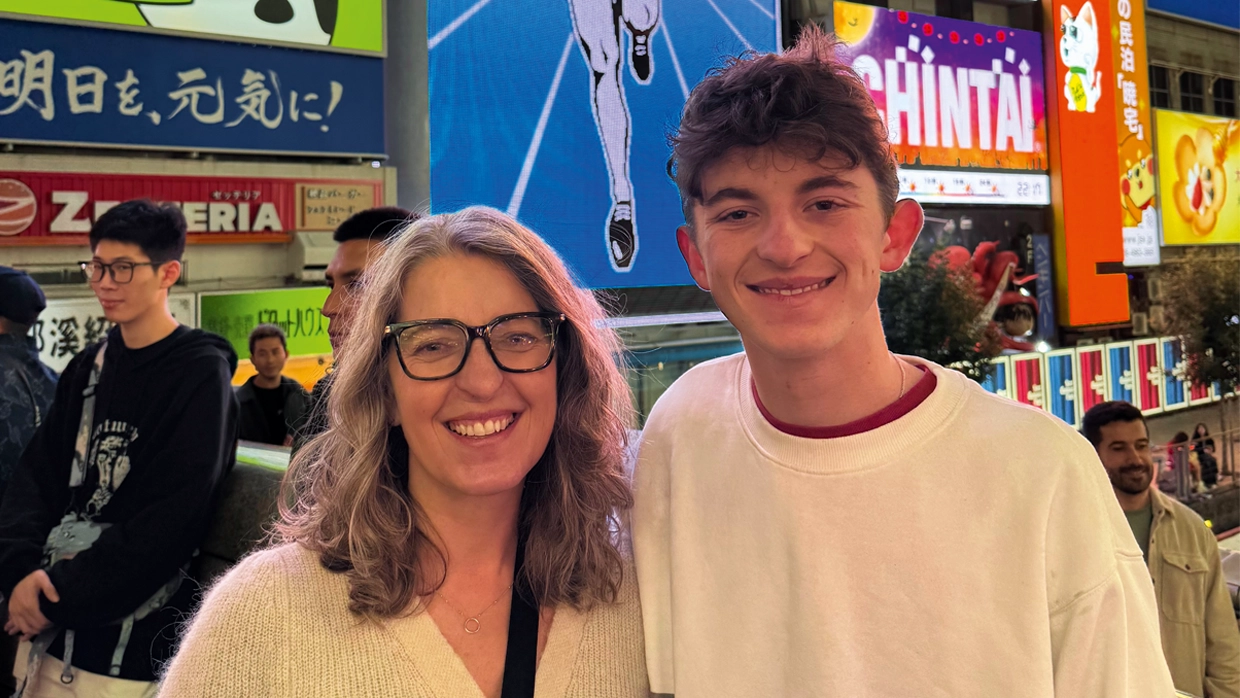
Dazzling strip lights highlighted the multitude of stalls in the famous Kuromon fish market, known as the city's kitchen, where sea urchins jostled for space with crab legs as big as my arm. And there was the glitz of Dotonbori, Osaka's heart, where towering colourful billboards illuminated the packed streets below.
It was chaotic, slightly crazy - and we loved it. And underpinning it all was an ease of access that was both unexpected and refreshing. People would always help. It was the first thing we noticed.
Ease of movement
Train stations in Japan are not small and unfamiliar signage meant they initially seemed slightly daunting. But there was always someone, whether staff or stranger, willing to show us, sometimes walking with us for 10 minutes or more to ensure we found the correct platform.
Stan uses a wheelchair part time and stations mostly had step-free access. Guides painted on the platforms detailed exactly where wheelchair users should wait to be assisted on to trains by white gloved attendants bearing ramps. On board, trains were clean with plenty of space and considerate passengers.
This ease of getting around was also evident when navigating the city itself. There were wide pavements and smooth surfaces - all well maintained and spotlessly clean.
We had always imagined Japan to be expensive. But even the most basic places were immaculate with perfect service, meaning it was not necessary to splash out to get great food or somewhere nice to stay.
All calm in Nara
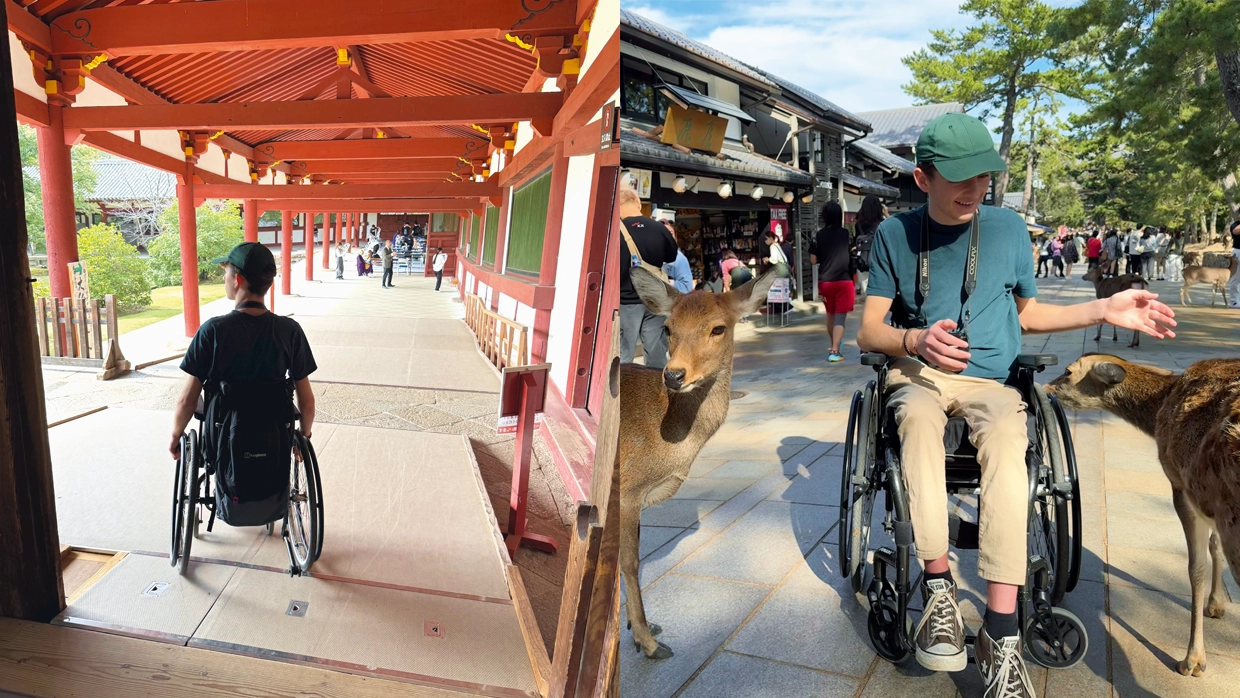
From Osaka we took the train to Nara, which felt worlds apart. Tranquil and serene despite its many visitors, Nara exuded a sense of calm. We visited the temple of Todai-ji, one of the largest wooden structures in the world, and home to the impressive Giant Buddha. Smooth wooden walkways enabled us to move freely while bypassing many of the queues. Outside, the sacred deer roamed around freely. They appeared cute but were quick to stand up for themselves when the crackers didn’t come quickly enough, even nibbling our clothes in protest.
Tradition and modernity in Kyoto
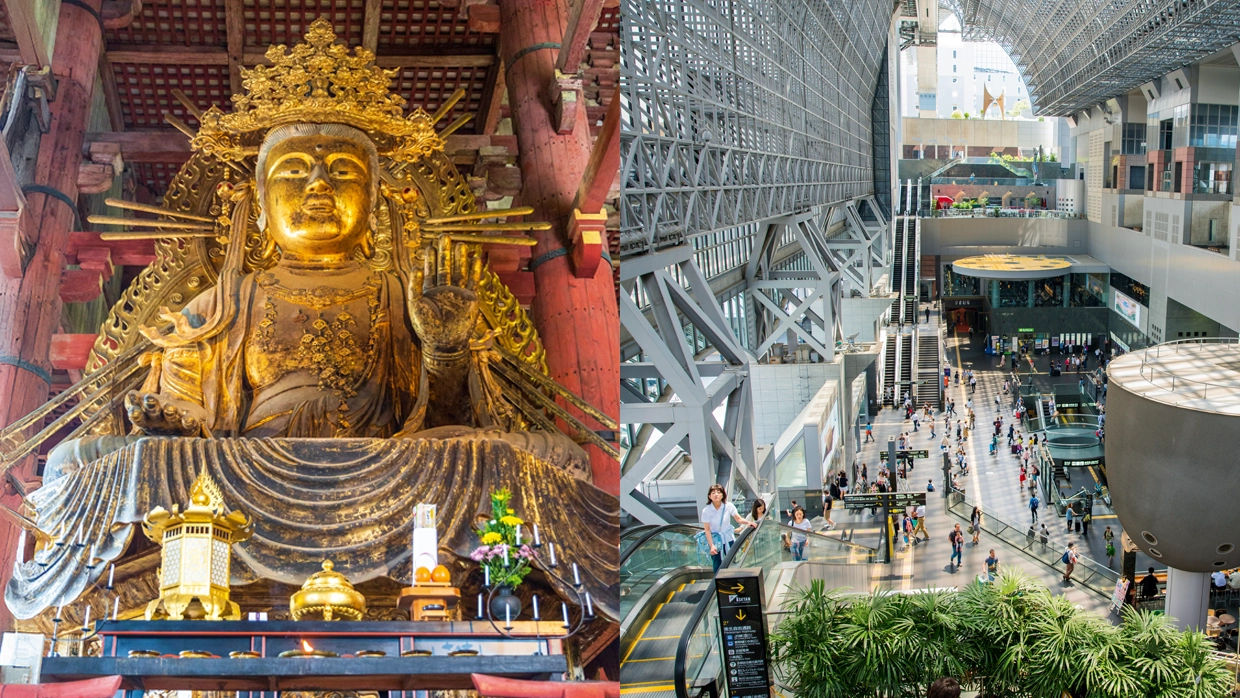
And then Kyoto – stepping off the train we found ourselves in a striking, ultra-modern train station, with skywalks and staircases illuminated with vivid and constantly changing images. Surrounded by similarly modern buildings, it was not what we had expected. But we had been told to look in the spaces, so that is what we did.
And in those spaces, we found what we were looking for. We wandered along the tiny street of Pontocho at night and encountered a geisha. We lost ourselves in the old area of Gion, where illuminated tea shops hinted at what was going on behind the closed doors.
The gardens of Kodai-ji were spectacular - the temple was built in 1606 and was surrounded by stunning gardens that displayed vibrant autumn foliage reflected perfectly from still lakes. The golden pavilion of Kinkaku-ji was similarly stunning, a beautiful temple with its two top floors completely covered in gold leaf.
But my personal favourite was Sanjusangen-do, the temple of 1001 statues. Slightly eerie with a thousand, almost identical, statues lined up around the goddess Kannon, every one with very subtly different facial features, peacefully waiting... it was mesmerising.
It was a wonderful trip. Japan was unlike anywhere else we have visited. Crazy and tranquil, surprising and comforting, overwhelming and welcoming all in equal measure. But great accessibility enabled us to keep up and enjoy the ride.
Where to stay
In Osaka we stayed at the Swissotel Nankai, which was centrally located, with accessible rooms and wonderful staff. And for wheelchair-friendly rooms in Kyoto, check out Hotel Granvia Kyoto. Rooms have sliding doors and accessible bathrooms.
Cheryl and Stan's long-haul travel tips
1. Inform your airline of your specific requirements before you fly. Confirm in writing and take a copy to the airport. Book special assistance as early as possible - it’s a legal right in the UK, EU and US, but check elsewhere. And research airport transport before you arrive.
2. Carry written details of all medications and, if you use an electric wheelchair, include a photocopy of the manual page that details battery information and how to disconnect it.
3. What may be comfortable for three hours will not necessarily be comfortable for 14. Take additional padding, perhaps the cushion off your wheelchair, or clothes that can be packed in around you to add support.
4. Use websites such as AeroLOPA to see the layout of the cabin and pick the most suitable seats for you. Buy the best your budget will allow.
5. Portable ramps are invaluable for that unexpected step and can be stored on your chair.
6. Pack smart - keep essentials close to hand in a small bag. Include plenty of snacks, especially if you have dietary restrictions.
About Cheryl
Cheryl Everitt is founder of A Wheel and Away, an accessible travel consultancy. She is passionate about accessible travel and adventure, being mum to two young people who are also wheelchair users.