
Will Behenna
"If I can help one more person get in the water, that's a good thing"
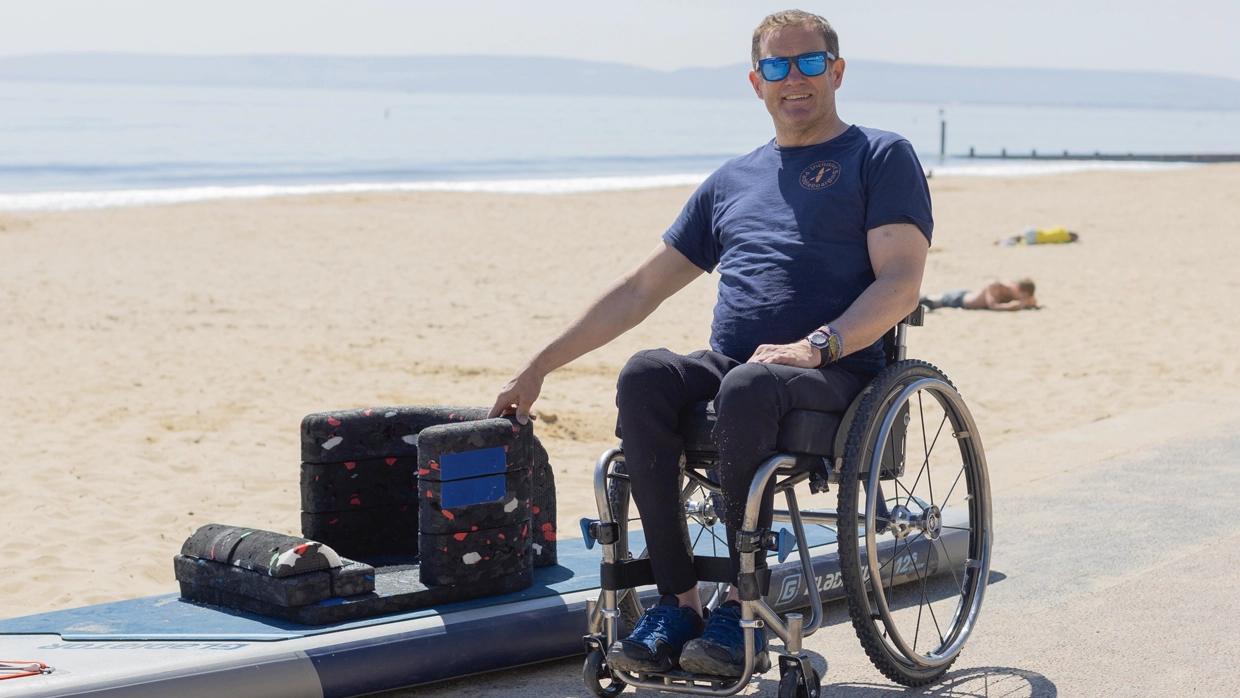
Will Behenna, who founded the Inclusive Paddleboarding Project (IPP), grew up half a mile from the sea, so he's a true water baby. But after breaking his back and becoming a full-time wheelchair user, he missed doing all the sports he loved. "One of the first things I wanted to do after my accident was get back on the water but, in the late 80s, it was almost impossible," he says.
Then, in the 2000s, he took a multi-activity course in the Lake District. "I learned how to fit myself into a kayak and get in and out of a sailing boat," he says. Will enjoyed kayaking but felt frustrated that he couldn't do it independently so, when paddleboards came out, with a wide, flat, stable base, he was intrigued. "I went into my shed and built a seat out of plywood, found some foam to sponge it out and tested it with some friends and it worked! I could see how much it impacted me to become an independent water user and I thought: 'If I can help one more person do that, that's a good thing.' "
Will launched the IPP, designing equipment that helps people with different medical conditions or disabilities use paddleboards. His biggest challenge has been finding locations to take clients paddleboarding. "Having to say, 'I'm sorry but the toilet at the site isn't open or we can't find the space to launch you on to the water safely', is my biggest frustration." It gave Will the idea to launch a National Beach Access Project to improve accessibility. "I can build anything, but if I can't get someone to the water's edge and launch them safely, and they can't change with dignity and manage their personal care, it's all for nothing," he says.
His Beach Access Survey collected 1,000 responses from people with medical conditions and disabilities across the UK, which were analysed by the University of Brighton. While 85 percent of people want to get to the water's edge, in the water or next to the water, 23 percent of respondents can't do that. "That can't be right", he says. "In Spain, there are beach access guidelines so they connect a boardwalk with toilet and changing facilities and the car park; they have lifeguards who can help you in and out of the water; and there are platform areas where you can hang out on the beach." (See our Tenerife travel feature.) He wants the same here.
For Will, the water provides "a feeling of escapism, connection, peace and exploration. It takes you to another place." He'll continue to work until everyone can enjoy that experience.
Visit Inclusive Paddleboarding. The Beach Access Survey report will be launched at the Houses of Parliament on 18 May 2026. See The Beach Access Project
Anisah Barber
"Being out in nature makes me feel confident"
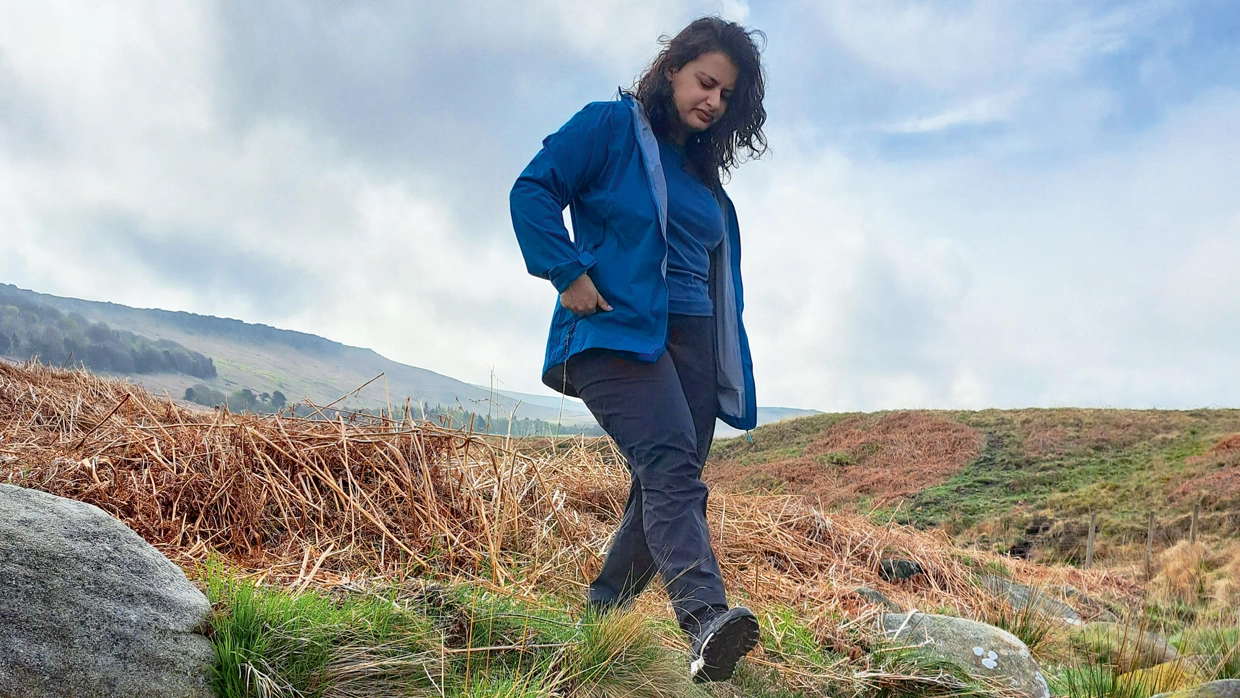
"In 2019, my husband started getting Derbyshire Life magazine, which featured a walk. He was keen, but I was struggling mentally, with doctors who weren't willing to do much for me. I expected to hate the walk but I enjoyed every second." This is how Anisah Barber, founder of the blog Outside: Our Way, fell in love with the great outdoors again.
Anisah has lupus, fibromyalgia and hypermobility spectrum disorder. She grew up hiking, swimming and cycling but, by 15, these activities left her in pain and exhausted, so she stopped.
"But that hike lifted my spirits and the effects of that joy lasted all week. Being in nature makes me feel capable and confident, which isn't how I feel at home when I'm struggling to do daily tasks, tired and in pain. The brief few hours whenever I manage to get outside feel like the best part of me," she says.
Initially, she based routes and distances on what people without disabilities were doing. "That led to me burning myself out, so I began sharing my story online and a bunch of people came out the woodwork saying they had lupus, rheumatoid arthritis or a completely different disability, and we started sharing tips." A new community blossomed and Anisah's blog was born.
Interviewing people with various health conditions and disabilities about how they connect with nature has strengthened her resolve to change a common narrative. "Rather than 'you're disabled but you overcame it and you did this really big thing', some of us just live with disabilities and that's fine. It's about removing that negativity and making it normal," she says.
For Anisah, that means timing painkillers, planning routes and her week before and after to ensure she's rested. She's accepted her personal boundaries, rather than reaching for an unattainable goal, she rests for as long and as often as she needs, and focuses on the fun. Anisah also picks her activity according to how she feels, "Wild swimming is accessible when I'm not able to do anything strenuous, because you're in the water for five or 10 minutes."
Anisah, who is an ambassador for the Campaign for National Parks and a disability campaigner for All The Elements, feels proud of the community she has built.
Inspired? She says not to be ashamed to ask for help or use aids, be it sticks or a scooter, and plan routes you can cut short if you need to. Most importantly, "find your community, which revolves around your disability, and reach out. Just trying is something to be proud of."
Visit All the Elements.
Fraser Bathgate
"I could move in ways that I couldn't on land"
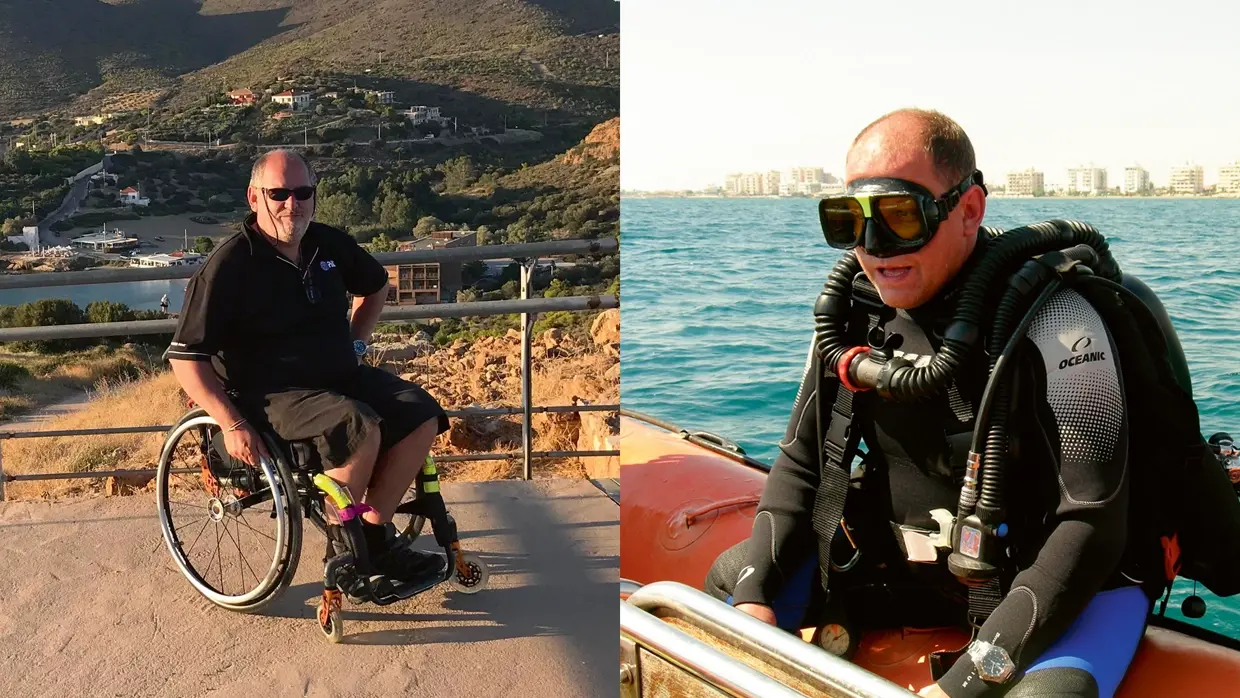
Formerly a professional rock climber, Fraser Bathgate became a wheelchair user after an accident. While adapting to his new circumstances, his sister invited him to go diving in Dubai and he loved it. "The minute I hit the water, it was a complete transformation," says Fraser. "I could move in ways that I couldn't on land, which made it the most empowering thing ever."
From that moment, he never looked back. In 1994, he became the first wheelchair user to qualify as a professional scuba diving instructor. Inspired by his incredible experience, Fraser began touring physical rehab centres, in what he called the 'No Barriers Tour', to inspire others to take the plunge, and he has since worked with UK and US injured military veterans.
"The freedom you get underwater is unlike any other adventure sport." He smiles warmly, recalling: "Once you are underwater, you feel it squeezing you gently, like a massive hug. And when you get into the ocean, there are corals and fish that you wouldn't believe existed."
Fraser is now the PADI (Professional Association of Diving Instructors) Global Adaptive Operations Lead and the man responsible for designing the Adaptive Techniques Programme, taught to PADI dive centres worldwide.
Fraser teaches his team of instructors to talk openly with new divers, allowing them to explain their individual needs. "If the centre can confidently talk about things like catheters and capping off stoma bags, some of the barriers are removed and conversations become freer," he says. To assist this, there is also an Adaptive Diver Support course, which enables carers and 'buddies' to train to assist the diver.
Accessing the water depends on where you are. Some boats will have accessible boarding facilities, while others may require trained staff to assist. Some boats may have hoists like those found in pools. From the beach, there are buggies, which enable the team to take the diver across the beach and directly into the water.
Scuba diving offers wide-ranging physical and mental health benefits, from improved cardiovascular fitness, strength and flexibility to reduced stress and a deep sense of calm. The experience of buoyancy can reduce physical barriers and support rehabilitation and confidence, making diving a powerful, inclusive form of exercise and escape. As Fraser says: "Diving changes you as a person, you begin thinking, 'When can I do this again? What's the next step?"
Visit the PADI website.
Debbie North
"It's the power of nature; it's good for your soul"
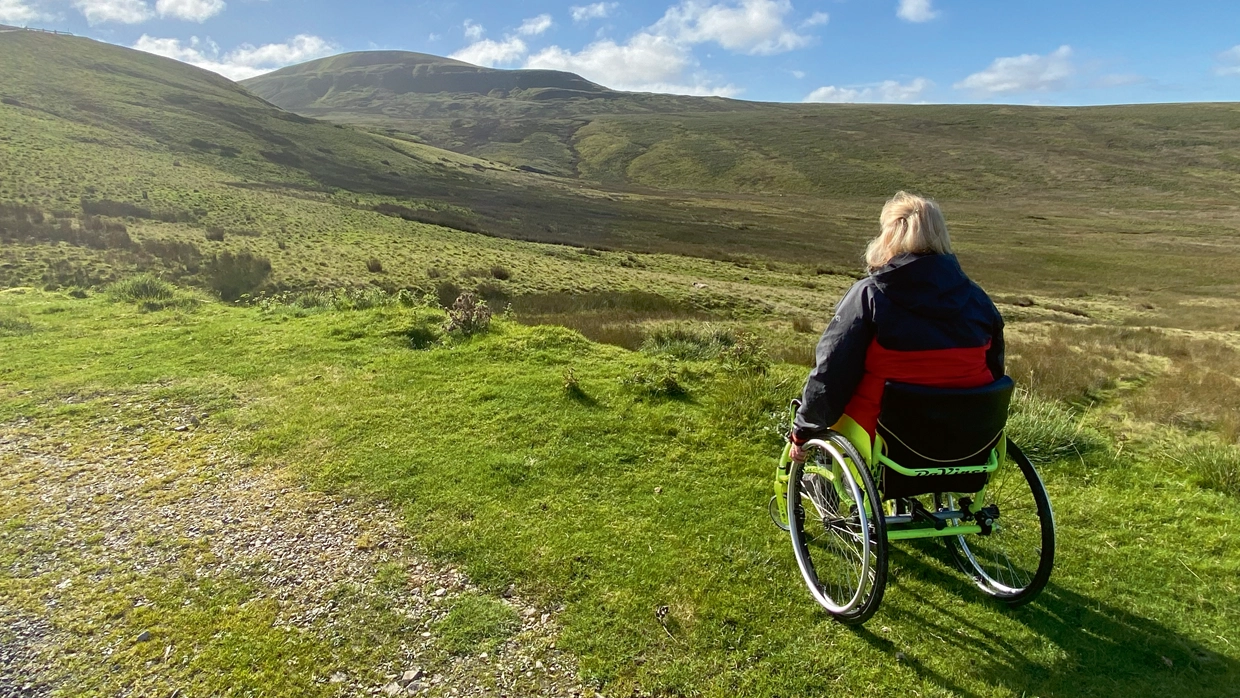
"My dad always said I should have been born in a field," laughs Debbie North, who grew up in the Peak District and founded Access The Dales, which provides free access to all-terrain wheelchairs and mobility vehicles in hubs in North Yorkshire and the Forest of Bowland in Lancashire.
Her charity was born out of personal experience. "When I met Andy, my late husband, he introduced me to the Yorkshire Dales and the Lake District, teaching me how to walk higher and further. I never anticipated that I would become a wheelchair user, no longer able to walk up the tracks."
So she started looking into access. The more Debbie researched, the more people she found who weren't able to get into nature. Now her charity is changing that, because "it's not a privilege to get out in nature, it should be a given right", she says.
Debbie is proud to have served as the Disability and Access Ambassador for the Countryside, trying to influence change. "There is a lot of good happening," she says. "There are over 70 locations where people can borrow an all-terrain wheelchair to access the stunning South West Coastal Path, there are wonderful schemes providing beach wheelchairs and inclusive water sports, but there are still man-made problems like obsolete gates - either put a gate in or, if the gate isn't needed, have a gap."
To access nature, she suggests starting small: "Spend a few minutes outdoors. Just sit, look, absorb what is around you, then reflect on how you feel afterwards. Look on your council website to see if there's anything about accessing the countryside."
Debbie describes how being in nature "wakes up all your senses - feeling the elements against your face, listening to the sounds, you can even taste the weather. It lowers your stress levels, helps you to engage with people and grow your confidence. It's the power of nature - it's good for your soul."
Visit Access The Dales.
MORE IDEAS FOR ACCESSIBLE OUTDOOR ADVENTURES
☆Access Adventures: This charity hosts inclusive camps and sessions to try waterskiing, kiting, paddlesports and more.
☆Countryside Mobility: Provides all-terrain Tramper mobility scooters for hire at over 50 outdoor attractions and beauty spots in the south-west of England. countrysidemobility.org
☆Outdoor Mobility: Enables people to enjoy locations in northern England using all-terrain Tramper mobility scooters.
☆Disabled Ramblers: This charity organises a programme of rambles for people who use mobility scooters. disabledramblers.co.uk
☆Level Water Provides specialist swimming lessons for children with disabilities.
☆Wetwheels Foundation: An organisation focused on barrier-free boating and accessible yachting for all.
☆Get Cycling: Offers loans of accessible cycles and inclusive cycling sessions.
Photos: Frankie Dewar; Courtesy of: Debbie North; Fraser Bathgate and Will Behenna